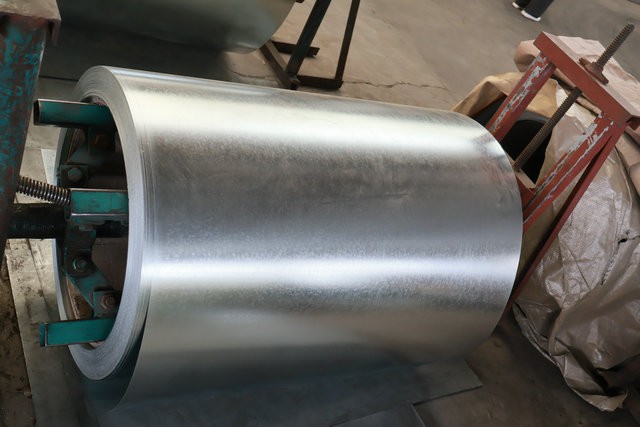
 To ensure the long-term corrosion resistance of galvanized products, surface treatment after manufacturing is indispensable. For the local coating damage areas caused by welding or cutting (usually accounting for 2% to 8% of the component surface area), repair treatment must be carried out. Thermal spray zinc (with a deposition efficiency of 60%-70% and a coating thickness of 50-100 μm) is a rapid repair method, but the surface needs to reach Sa 2.5 grade cleanliness (residual contaminants ≤ 0.3 mg/m²), and the sandblasting cost is approximately 5-10 yuan per square meter. Applying zinc-rich primer (dry film zinc content ≥ 85%) in combination with intermediate coat and topcoat is a common solution, but it is necessary to ensure that the volume concentration of zinc powder in the paint film (PVC) exceeds the critical pigment volume concentration (CPVC), usually reaching 25%-35%. The total dry film thickness of the entire coating system must exceed 150 μm in order to achieve salt spray resistance for more than 1000 hours without red rust. For precision equipment parts (such as sheet metal of electrical cabinets), chromate passivation treatment can be adopted to form a 0.2-0.5 μm Cr³⁺ conversion film layer on the exposed substrate surface, delaying the appearance time of early white rust by 70%-90%.
Overall, the welding and manufacturing of Galvanized steel plate need to strike a balance among cost, efficiency and quality. Compared with uncoated steel plates, its overall manufacturing cycle may be extended by 15% to 25%, human resource consumption may increase by 10% to 15% (for additional protection and process control), and equipment depreciation may accelerate by 5% (the system wear rate caused by zinc smoke and dust increases by 0.1% per year). However, by optimizing the process flow (for instance, using high-speed welding robots in combination with closed-loop exhaust systems can increase efficiency by 18%), standardizing operations (preheating to 80℃-100℃ before welding can reduce porosity by 60%), and precise post-treatment (such as 100% weld seam magnetic particle flaw detection combined with automatic repair), It can significantly control the increase of additional costs to within 5% to 10% of the initial material costs. This kind of systematic manufacturing solution ensures the ability of galvanized steel sheets to continuously create value.
To ensure the long-term corrosion resistance of galvanized products, surface treatment after manufacturing is indispensable. For the local coating damage areas caused by welding or cutting (usually accounting for 2% to 8% of the component surface area), repair treatment must be carried out. Thermal spray zinc (with a deposition efficiency of 60%-70% and a coating thickness of 50-100 μm) is a rapid repair method, but the surface needs to reach Sa 2.5 grade cleanliness (residual contaminants ≤ 0.3 mg/m²), and the sandblasting cost is approximately 5-10 yuan per square meter. Applying zinc-rich primer (dry film zinc content ≥ 85%) in combination with intermediate coat and topcoat is a common solution, but it is necessary to ensure that the volume concentration of zinc powder in the paint film (PVC) exceeds the critical pigment volume concentration (CPVC), usually reaching 25%-35%. The total dry film thickness of the entire coating system must exceed 150 μm in order to achieve salt spray resistance for more than 1000 hours without red rust. For precision equipment parts (such as sheet metal of electrical cabinets), chromate passivation treatment can be adopted to form a 0.2-0.5 μm Cr³⁺ conversion film layer on the exposed substrate surface, delaying the appearance time of early white rust by 70%-90%.
Overall, the welding and manufacturing of Galvanized steel plate need to strike a balance among cost, efficiency and quality. Compared with uncoated steel plates, its overall manufacturing cycle may be extended by 15% to 25%, human resource consumption may increase by 10% to 15% (for additional protection and process control), and equipment depreciation may accelerate by 5% (the system wear rate caused by zinc smoke and dust increases by 0.1% per year). However, by optimizing the process flow (for instance, using high-speed welding robots in combination with closed-loop exhaust systems can increase efficiency by 18%), standardizing operations (preheating to 80℃-100℃ before welding can reduce porosity by 60%), and precise post-treatment (such as 100% weld seam magnetic particle flaw detection combined with automatic repair), It can significantly control the increase of additional costs to within 5% to 10% of the initial material costs. This kind of systematic manufacturing solution ensures the ability of galvanized steel sheets to continuously create value.
How do Galvanized plates handle welding and fabrication?
Galvanized steel plates face the challenge of zinc coating evaporation (typically with a thickness of 7-30 microns and a zinc layer mass ranging from Z60 to Z600 g/m²) during the welding process, and the resulting zinc fume (ZnO) concentration can be as high as 0.1-0.5 mg/m³. This requires that the welding workshop must have an efficient local exhaust system (with a minimum air volume of 1000 m³/h) and enforce the use of respiratory protective equipment (such as P100-level particulate respirators) to ensure that the exposure concentration of workers is below the 5 mg/m³ limit stipulated by OSHA. Gas shielded metal arc welding (GMAW/MIG) is a commonly used method, but the welding current needs to be reduced by 10-30A (for example, when welding a 3mm thick plate, the current is reduced from the standard 150A to 130A). At the same time, increase the protective gas flow rate to 20-25 L/min (higher than 15-18 L/min for uncoated steel), and raise the wire feeding speed by 5%-10% to compensate for the change in the viscosity of the molten pool. The arc voltage usually needs to be about 1-2 volts lower than that of low-carbon steel welding, because the lower ionization potential of zinc (9.39 eV) will change the arc characteristics. Gas selection is crucial: the splashing volume of argon-rich mixtures (such as 92% Ar + 8% CO₂) is 15% less than that of pure CO₂, but the cost increases by 10% to 15%. After the zinc coating at the weld seam is completely evaporated, the zinc coating in the heat-affected zone (HAZ) will be damaged in the area where the peak welding temperature exceeds 350℃, forming an unprotected zone with an average width of 1.5 to 3.0 millimeters, which is prone to become the starting point of corrosion during service.
In terms of cutting and forming processing, the manufacturing process parameters of Galvanized steel plates need to be adjusted to avoid coating damage. When laser cutting, to reduce the interference and splashing of zinc vapor (the surface roughness Ra can be increased to 3.0-5.0 μm), the power needs to be increased by 5%-10% (for example, 2.5 kW instead of 2.3 kW is needed when cutting a 2mm plate). Meanwhile, reduce the cutting speed by approximately 10% (from 10 m/min to 9 m/min), and increase the pressure of the auxiliary gas (nitrogen) to 1.2-1.5 bar. During the mechanical shearing process, the edge clearance needs to be reduced by 10% to 15% compared to the processing of uncoated plates (for example, when shearing a 1.5mm plate, the clearance should be adjusted from 0.12mm to 0.10mm) to minimize the peeling of the coating (the peeling area may exceed 8%). When forming or bending hydraulically, the bending radius should not be less than 1.0 times the thickness of the plate (for example, for a 2mm plate, the minimum R=2mm), otherwise the risk of cracking of the zinc layer on the outside of the bending exceeds 80%. The rebound Angle may be 1° to 2° higher than that of the cold-rolled sheet, and positive compensation needs to be made in the mold design. Repeated cold working operations (more than 3-4 bends) will deplete the ductility of the zinc coating, increasing the probability of local peeling to 30%.
To ensure the long-term corrosion resistance of galvanized products, surface treatment after manufacturing is indispensable. For the local coating damage areas caused by welding or cutting (usually accounting for 2% to 8% of the component surface area), repair treatment must be carried out. Thermal spray zinc (with a deposition efficiency of 60%-70% and a coating thickness of 50-100 μm) is a rapid repair method, but the surface needs to reach Sa 2.5 grade cleanliness (residual contaminants ≤ 0.3 mg/m²), and the sandblasting cost is approximately 5-10 yuan per square meter. Applying zinc-rich primer (dry film zinc content ≥ 85%) in combination with intermediate coat and topcoat is a common solution, but it is necessary to ensure that the volume concentration of zinc powder in the paint film (PVC) exceeds the critical pigment volume concentration (CPVC), usually reaching 25%-35%. The total dry film thickness of the entire coating system must exceed 150 μm in order to achieve salt spray resistance for more than 1000 hours without red rust. For precision equipment parts (such as sheet metal of electrical cabinets), chromate passivation treatment can be adopted to form a 0.2-0.5 μm Cr³⁺ conversion film layer on the exposed substrate surface, delaying the appearance time of early white rust by 70%-90%.
Overall, the welding and manufacturing of Galvanized steel plate need to strike a balance among cost, efficiency and quality. Compared with uncoated steel plates, its overall manufacturing cycle may be extended by 15% to 25%, human resource consumption may increase by 10% to 15% (for additional protection and process control), and equipment depreciation may accelerate by 5% (the system wear rate caused by zinc smoke and dust increases by 0.1% per year). However, by optimizing the process flow (for instance, using high-speed welding robots in combination with closed-loop exhaust systems can increase efficiency by 18%), standardizing operations (preheating to 80℃-100℃ before welding can reduce porosity by 60%), and precise post-treatment (such as 100% weld seam magnetic particle flaw detection combined with automatic repair), It can significantly control the increase of additional costs to within 5% to 10% of the initial material costs. This kind of systematic manufacturing solution ensures the ability of galvanized steel sheets to continuously create value.
To ensure the long-term corrosion resistance of galvanized products, surface treatment after manufacturing is indispensable. For the local coating damage areas caused by welding or cutting (usually accounting for 2% to 8% of the component surface area), repair treatment must be carried out. Thermal spray zinc (with a deposition efficiency of 60%-70% and a coating thickness of 50-100 μm) is a rapid repair method, but the surface needs to reach Sa 2.5 grade cleanliness (residual contaminants ≤ 0.3 mg/m²), and the sandblasting cost is approximately 5-10 yuan per square meter. Applying zinc-rich primer (dry film zinc content ≥ 85%) in combination with intermediate coat and topcoat is a common solution, but it is necessary to ensure that the volume concentration of zinc powder in the paint film (PVC) exceeds the critical pigment volume concentration (CPVC), usually reaching 25%-35%. The total dry film thickness of the entire coating system must exceed 150 μm in order to achieve salt spray resistance for more than 1000 hours without red rust. For precision equipment parts (such as sheet metal of electrical cabinets), chromate passivation treatment can be adopted to form a 0.2-0.5 μm Cr³⁺ conversion film layer on the exposed substrate surface, delaying the appearance time of early white rust by 70%-90%.
Overall, the welding and manufacturing of Galvanized steel plate need to strike a balance among cost, efficiency and quality. Compared with uncoated steel plates, its overall manufacturing cycle may be extended by 15% to 25%, human resource consumption may increase by 10% to 15% (for additional protection and process control), and equipment depreciation may accelerate by 5% (the system wear rate caused by zinc smoke and dust increases by 0.1% per year). However, by optimizing the process flow (for instance, using high-speed welding robots in combination with closed-loop exhaust systems can increase efficiency by 18%), standardizing operations (preheating to 80℃-100℃ before welding can reduce porosity by 60%), and precise post-treatment (such as 100% weld seam magnetic particle flaw detection combined with automatic repair), It can significantly control the increase of additional costs to within 5% to 10% of the initial material costs. This kind of systematic manufacturing solution ensures the ability of galvanized steel sheets to continuously create value.