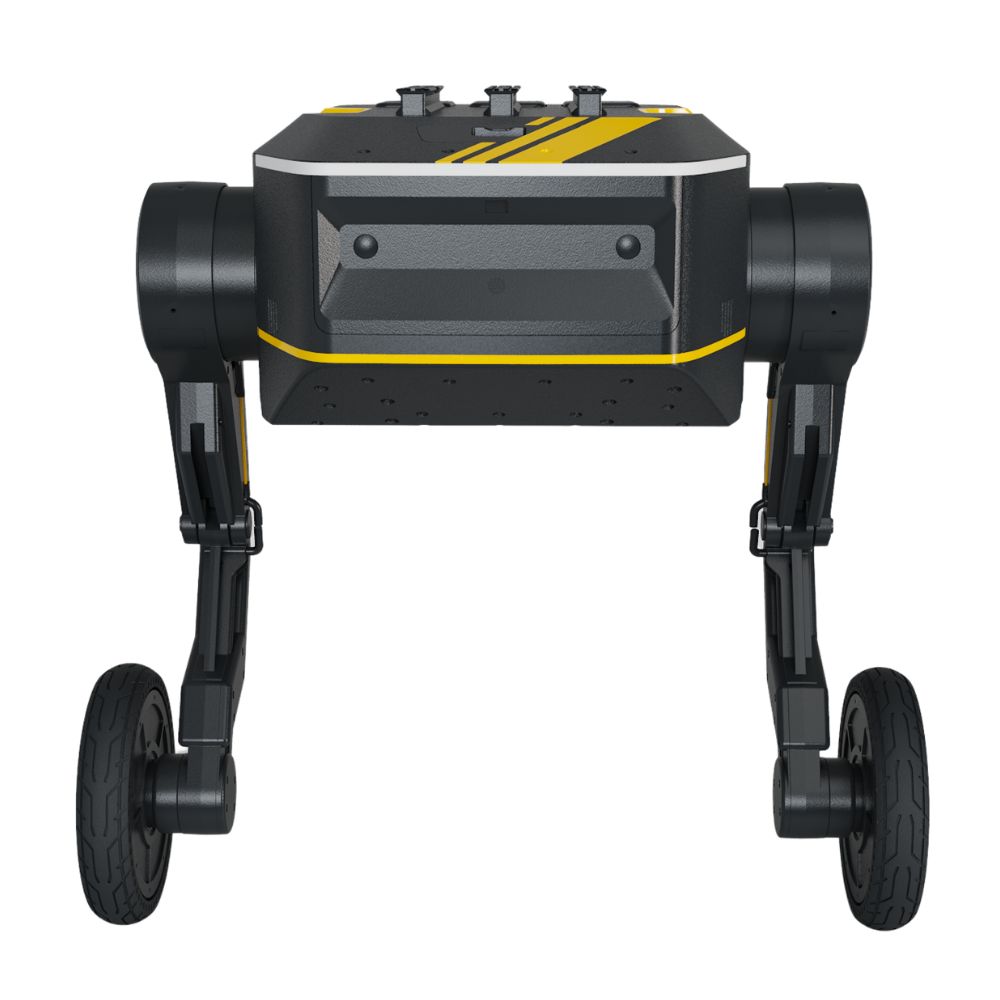
A complete procurement checklist for robot platforms and direct drive motors should evaluate mechanical capacity, motion accuracy, electrical compatibility, thermal performance, software support, and supplier reliability. Industrial robot buyers should compare payload range, torque density, encoder resolution, protection rating, and lifecycle cost before purchasing. For example, modern collaborative robots commonly operate with payloads from 3 kg to 30 kg, while advanced robotic joints may require more than 50 Nm/kg torque density. A structured evaluation process helps companies reduce integration problems and improve long-term operating performance.
Robot platform selection starts with defining the working environment, application requirements, and expected operating cycle. A warehouse AMR, industrial robotic arm, humanoid platform, and laboratory robot require different hardware specifications.
A robot used in manufacturing may operate 16–24 hours per day, while a research platform may run fewer than 8 hours daily but require higher flexibility. Buyers should collect application data before reviewing supplier catalogs.
The first procurement document should include payload, working range, speed, accuracy, duty cycle, environmental conditions, and future expansion requirements.
The mechanical design of the platform determines how efficiently the robot can handle real workloads. Payload specifications should include not only the tool weight but also the forces created during acceleration and stopping.
| Parameter | Typical Industrial Requirement |
|---|---|
| Payload capacity | 3–100 kg depending on application |
| Repeatability | ±0.01 mm to ±0.1 mm |
| Operating cycle | 8–24 hours/day |
| Protection level | IP54–IP67 |
| Service life | 20,000–50,000 operating hours |
A robot arm rated at 20 kg payload may require significantly higher joint torque when moving quickly. In 2024, many industrial robot manufacturers improved payload-to-weight ratios by approximately 15–30% compared with previous generations through lighter materials and improved actuator designs.
The mechanical requirements directly influence the choice of actuator technology. Direct drive motors are increasingly used in applications where precision and fast response are required because they remove mechanical transmission components such as gears and belts.
Traditional geared systems often introduce backlash and friction losses. Direct drive designs connect the motor directly to the load, providing smoother motion and improved control accuracy.
Direct Drive motor solutions are commonly selected for applications requiring high precision, low maintenance, and fast response characteristics.
When selecting a direct drive motor, torque capability should be reviewed first. Continuous torque defines the output capability during long operating periods, while peak torque determines short acceleration performance.
Motor suppliers usually provide torque-speed curves showing the relationship between rotational speed and available torque. A motor operating near its maximum continuous torque for extended periods may require additional cooling.
| Motor Specification | Procurement Check |
|---|---|
| Continuous torque | Match daily operating requirements |
| Peak torque | Verify acceleration needs |
| Rated speed | Match application motion range |
| Torque density | Compare size and weight efficiency |
| Rotor inertia | Evaluate response speed |
For example, a robotic joint requiring 40 Nm continuous torque and 120 Nm peak torque should not be equipped with a motor rated only for short bursts. In industrial testing, insufficient torque margin can reduce actuator lifetime by more than 20% due to repeated thermal stress.
Torque density is another important factor for compact robots. A higher torque density allows manufacturers to reduce actuator size while maintaining performance.
Humanoid robots, mobile manipulators, and lightweight robotic arms often require compact motors because every additional kilogram affects battery consumption and structural requirements.
A direct drive actuator with higher torque density can reduce mechanical system weight by 10–40% depending on the original design. This improvement helps increase operating time for battery-powered robots.
Motor inertia also affects robot movement quality. Lower rotor inertia allows faster acceleration and better force control.
For high-speed applications such as pick-and-place systems, the motor must quickly change direction thousands of times per day. A motor with excessive inertia may increase settling time and reduce production efficiency.
Encoder selection should receive similar attention because direct drive systems depend heavily on accurate position feedback.
Important encoder specifications include:
-
Resolution
-
Accuracy
-
Sampling frequency
-
Absolute or incremental measurement
-
Environmental resistance
Modern robotic joints frequently use 17-bit to 23-bit absolute encoders. A 20-bit encoder provides more than 1 million position counts per revolution, allowing precise motion control for demanding applications.
The next consideration after motion accuracy is thermal management. Heat generation affects motor performance, reliability, and service intervals.
Motor heat mainly comes from copper losses in windings, magnetic losses, and bearing friction. During continuous operation, temperature rise must remain within manufacturer specifications.
| Cooling Method | Typical Application |
|---|---|
| Natural cooling | Small robotic systems |
| Fan cooling | Industrial automation |
| Liquid cooling | High-power robotic actuators |
A motor operating at 80% of its thermal limit continuously may experience reduced lifetime compared with one operating at 50–60% capacity. Many manufacturers perform thermal tests using 25°C ambient conditions, so buyers should request additional data for real operating environments.
Electrical compatibility must also be confirmed before purchasing. The motor, controller, and power supply must work together without requiring major redesign.
Important electrical parameters include:
-
Rated voltage
-
Maximum current
-
Motor constant
-
Back EMF characteristics
-
Communication protocol
Industrial robots commonly use 24 V, 48 V, or higher voltage systems. EtherCAT, CAN bus, and industrial Ethernet are widely used for multi-axis robot control because they support synchronized communication.
Software compatibility has become increasingly important since robots are often integrated with artificial intelligence systems, simulation platforms, and autonomous control software.
Before purchasing, companies should check:
| Software Item | Evaluation |
|---|---|
| API availability | Required for custom applications |
| SDK support | Important for development |
| ROS/ROS 2 compatibility | Useful for research and automation |
| Simulation tools | Reduce integration time |
| Firmware update process | Supports long-term operation |
A platform with open software interfaces can reduce future modification costs. In 2023–2025, many robotic companies increased investment in open development ecosystems because software flexibility became a major purchasing factor.
Supplier evaluation should include manufacturing capability, quality control, and technical support. Hardware specifications alone cannot determine long-term reliability.
Buyers should request:
-
Motor test reports
-
Accuracy verification data
-
Thermal performance data
-
Lifetime testing information
-
Certification documents
A reliable supplier should provide measured performance data instead of only marketing specifications.
Manufacturing consistency is especially important when purchasing multiple robot units. Variation between actuators can affect calibration time and system performance.
Quality certifications such as ISO 9001, CE, and RoHS are commonly reviewed during industrial procurement. Suppliers with established testing procedures usually provide better documentation and after-sales support.
Cost analysis should consider the entire ownership period rather than only purchase price. A cheaper motor may require more maintenance or replacement parts.
A lifecycle cost assessment should include:
| Cost Category | Evaluation Content |
|---|---|
| Initial purchase | Hardware price |
| Integration | Engineering time |
| Maintenance | Service frequency |
| Energy use | Operating efficiency |
| Replacement | Expected lifetime |
For example, a motor with 15% higher initial cost but 30% lower maintenance requirements may provide better long-term economics over a five-year operating period.
Before final approval, procurement teams should complete a technical checklist covering platform, actuator, control system, and supplier factors.
| Category | Check Items |
|---|---|
| Robot platform | Payload, accuracy, speed, environment |
| Direct drive motor | Torque, encoder, cooling, voltage |
| Control system | Communication, software, integration |
| Supplier | Testing, certification, support |
A complete procurement process helps companies select robot systems that match their application requirements and operating conditions. Robot platforms and direct drive motors should be evaluated as one integrated system because mechanical design, actuator performance, and control software directly influence each other.
The selection process should include technical verification, supplier communication, and lifecycle evaluation before purchase approval. With accurate specifications and proper testing, robotic systems can achieve stable performance across manufacturing, logistics, research, and automation applications.